

7 Signs Your Fibreglass Pool Needs Resurfacing (And Why You Shouldn’t Wait)
7 Signs Your Fibreglass Pool Needs Resurfacing (And Why You Shouldn’t Wait)
Your pool has been through a lot. Years of Perth summers, relentless UV exposure, salt, chlorine and the kind of heat that most pool surfaces were never truly built for. For most fibreglass pools across Western Australia, there comes a point where the surface itself needs attention.
The good news is that resurfacing is far less disruptive and far more affordable than most homeowners expect. Catching the signs early means you deal with a straightforward resurface rather than a much costlier repair job down the track.
Here are 7 signs your fibreglass pool is telling you it is time.
1. The Surface Feels Rough or Abrasive
Run your hand along the pool wall. It should feel smooth — almost glassy. If it does not, the gel coat has worn through.
What to look for:
- Roughness or grit on the walls, steps and benches
- Skin or swimwear catching on the surface
- Persistent algae that chemicals cannot fully clear
A worn gel coat creates microscopic pits where algae embeds itself. A fresh fibreglass resurface restores the smooth, non-porous finish that makes maintenance easy again.
2. The Colour Has Faded or Gone Chalky
A pool that once had a rich, vibrant colour but now looks pale, washed out or chalky is showing the effects of WA’s UV exposure.
What to look for:
- Noticeable colour loss compared to when the pool was new
- A powdery white residue left on your hand after touching the surface
- Uneven discolouration across the pool walls
Fading starts as cosmetic. Chalking signals the gel coat has begun to break down structurally — and at that point the surface is no longer protecting the shell the way it should.
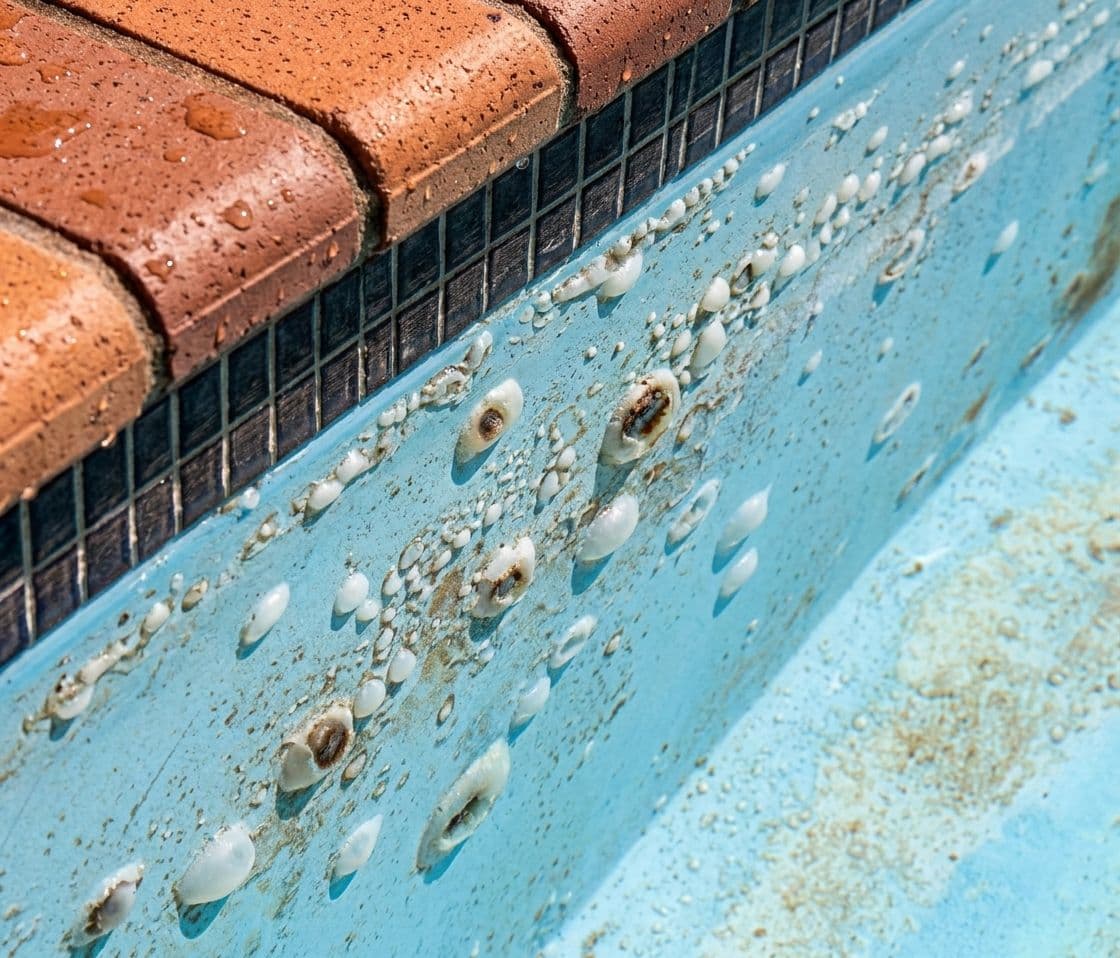
3. You Can See Blistering or Bubbling
Blistering is one of the most serious signs a fibreglass surface has reached the end of its life. It is caused by osmosis — water penetrating the gel coat and becoming trapped beneath the surface.
What to look for:
- Small raised bubbles or blisters on the pool walls
- Blisters that pop and leave pitted, rough patches behind
- Clusters of blistering that are spreading over time
Left untreated, osmosis spreads and the cost of fixing it grows. Catching it early and resurfacing is significantly less expensive than allowing it to progress to structural damage.
4. You Are Noticing Fine Cracks or Crazing
Fine networks of cracks across the surface — known as crazing — signal the gel coat has become brittle. This is common in older pools and pools exposed to extreme temperature swings, which is a reality across regional Western Australia.
What to look for:
- A web of fine cracks across the pool surface
- Cracks concentrated around fittings, corners and the waterline
- Discolouration or staining along the crack lines
Crazing allows water to penetrate the surface and reach the shell beneath. A fibreglass resurface seals the surface and stops further water ingress.
5. Your Pool Is Losing Water Faster Than Normal
Every pool loses some water to evaporation — particularly during Perth and Geraldton summers. But if you are topping up more frequently than usual, the surface may be the reason.
What to look for:
- Water loss that cannot be explained by splash or evaporation
- Needing to top up the pool several times a week
- Wet patches or soft ground around the pool exterior
Before assuming a plumbing issue, have the surface inspected. In many cases a resurface resolves the problem entirely — at a fraction of the cost of a structural investigation.
6. Algae Keeps Coming Back No Matter What You Do
If algae returns within days of treatment regardless of how many chemicals you add, the surface is likely the problem — not your maintenance routine.
What to look for:
- Green or black algae returning consistently despite chemical treatment
- Staining that will not lift no matter how much you scrub
- A surface that feels rough or porous to the touch
A deteriorated gel coat gives algae somewhere to embed and hide. A fresh resurface restores the smooth finish that keeps algae from taking hold in the first place.
7. Hairline Cracks Are Appearing Along the Shell
Hairline cracks running along the pool shell — particularly around fittings and corners — signal the gel coat has aged past the point where maintenance alone will help.
What to look for:
- Thin cracks running along the pool shell or around fittings
- Cracks that are growing or spreading over time
- Water seeping through the shell in areas around the cracks
This is the sign that most clearly says it is time to act. A fibreglass resurface at this stage protects the shell from further deterioration and avoids far more costly structural work down the track.
What Happens If You Wait?
The longer a deteriorated fibreglass surface is left, the more the damage progresses — and the more expensive the solution becomes. What starts as a straightforward resurface can develop into structural repair work if water is allowed to penetrate the shell over an extended period.
In the vast majority of cases — pools across Perth suburbs, Geraldton and regional WA — resurfacing is all that is needed. No excavation, no new pool, no months of disruption. Just a fresh fibreglass finish that gives your pool another 15 to 20 years of life, backed by a 15-year warranty.
Ready to Get Your Pool Assessed?
If any of these signs sound familiar, the next step is a free quote from the Bluvitalize team. We service pools across Perth, Geraldton and all of regional Western Australia — and we will tell you honestly what your pool needs.